
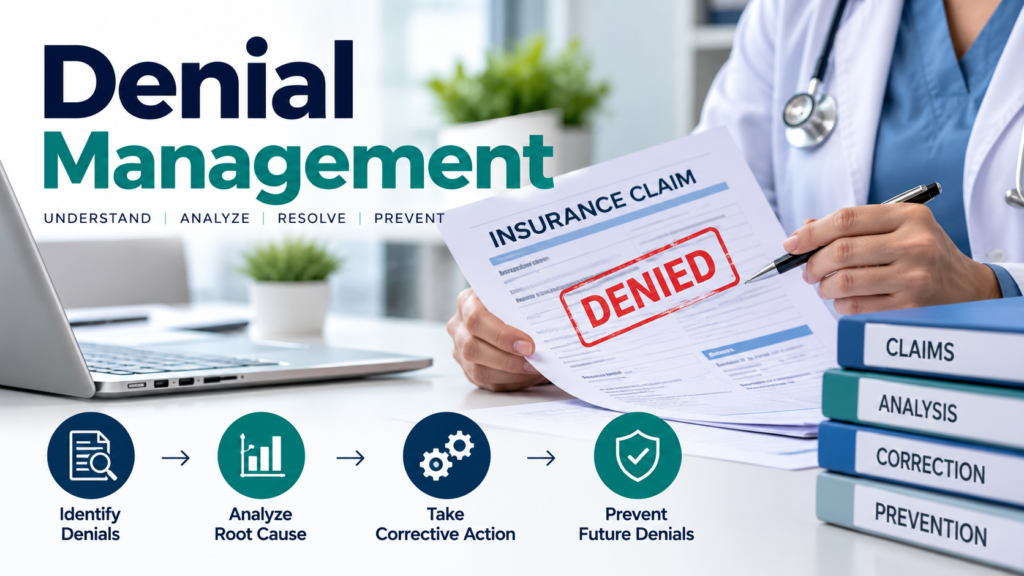
Coding denials in Hospital Billing (HB) are not always caused by “wrong coding.” A facility claim can deny when the codes reported on the UB-04, don’t align with the clinical documentation, payer policy, or claim requirements. Some common coding-related HB denial reasons include:
🔹 Diagnosis does not support the procedure/service billed
🔹 Incorrect ICD-10-CM diagnosis code
🔹 Incorrect ICD-10-PCS procedure code
🔹 DRG assignment error
🔹 Incorrect diagnosis sequencing
🔹 Missing or inappropriate modifiers
🔹 Procedure-to-diagnosis mismatch
🔹 Code not supported by documentation
🔹 Invalid or incomplete coding combination
🔹 Payer-specific coding edits
🔹 NCCI/bundling-related issues
🔹 Incorrect coding of complications or comorbidities.
One area that deserves particular attention is the documentation-to-code relationship. If the medical record doesn’t clearly support the diagnosis, procedure, complication, or severity reported on the claim, the issue may not be with the coder alone. It can start with documentation quality. That’s why effective HB denial management should connect:
Clinical Documentation → CDI → Coding → DRG → Claim → Payer Edit
Instead of simply correcting the denied code, ask: “What caused the coding discrepancy, and what can we change upstream to prevent it?” Because successful denial management isn’t just about getting the claim paid. It’s about making the next claim clean before it ever reaches the payer.
#HospitalBilling #HB #CodingDenials #MedicalCoding #ICD10CM #ICD10PCS #DRG #CDI #HealthcareRCM #DenialManagement #USHealthcare